Five challenges every UK manufacturer is talking about right now
Spend enough time speaking with manufacturers and you start to notice something interesting.


%20(1).webp)


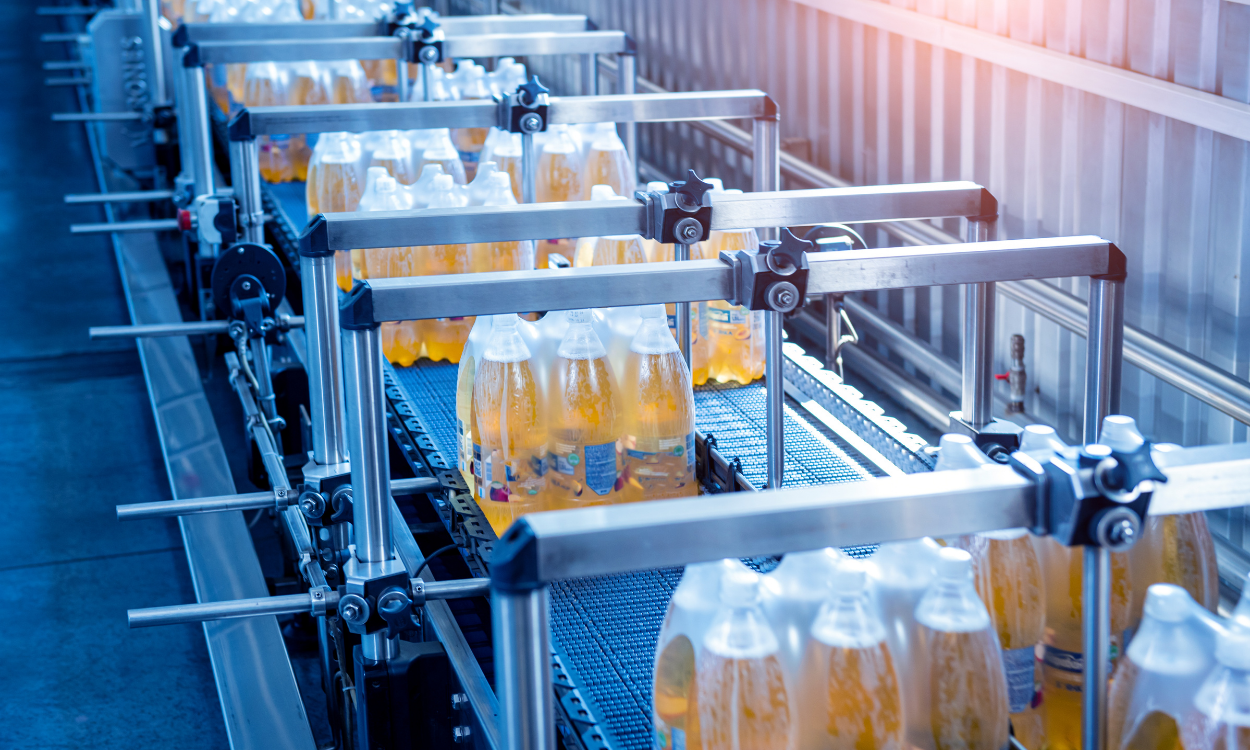
The processing and packaging industry has never been short of innovation. Faster equipment, greater automation and increasingly sophisticated production lines have continually changed what manufacturers can achieve.
But as we look towards 2030, having the latest machinery alone may not be what separates the industry's highest performers.
The real advantage will increasingly come from something else: how effectively manufacturers understand, manage and improve what is already happening on their factory floors.
Manufacturers continue to invest heavily in automation, robotics and production technology. Yet even highly automated facilities can lose significant productive capacity through relatively small, recurring issues.
A few minutes waiting for materials. A minor stoppage that isn't recorded accurately. A changeover that consistently takes longer than expected. A line running below its intended speed. Quality issues that only become apparent after production has moved on.
Individually, these events can appear insignificant. Across multiple lines, shifts, products and sites, however, they quickly add up.
By 2030, leading manufacturers won't simply be asking "How fast can this machine run?"
They'll be asking "How effectively are we using the capacity we already have?"
That distinction matters.
One of the biggest shifts already underway in manufacturing is the move from retrospectively reporting performance to understanding it as it happens.
Traditional production reports can tell teams what happened yesterday, last week or last month. The next generation of manufacturing intelligence allows them to see what is happening right now.
When production teams can identify downtime as it occurs, understand the reason behind it and compare performance across lines, shifts and products, conversations change.
Instead of debating where a problem exists, teams can focus on solving it.
Instead of relying on assumptions, they can work from evidence.
And instead of discovering lost capacity at the end of the month, they can respond while there is still an opportunity to recover it.
Digital transformation is sometimes associated with large-scale technology projects requiring significant investment, integration and disruption.
That doesn't have to be the case.
Some of the most valuable improvements can begin with a relatively simple question:
Where are we losing production time, and why?
Giving operators and production leaders better visibility into downtime, speed loss, changeovers and recurring production issues can create an immediate foundation for improvement.
The manufacturers that succeed over the next several years are likely to be those that make operational intelligence accessible throughout the organisation, from the factory floor through to senior leadership, rather than allowing valuable production data to remain trapped in machines, spreadsheets or disconnected systems.
Artificial intelligence will inevitably be part of the manufacturing conversation between now and 2030.
But its real value won't come from adopting AI simply because the technology exists.
It will come from applying it to useful manufacturing data.
Imagine being able to ask which line experienced the greatest downtime last month, what caused it, which products were most affected and where the biggest improvement opportunity exists, without manually analysing multiple reports.
That is where manufacturing intelligence is heading.
AI can dramatically reduce the distance between data and decision-making, but its effectiveness will ultimately depend on the quality, consistency and accessibility of the operational information beneath it.
The groundwork manufacturers put in place today will therefore matter enormously.
By 2030, manufacturers will have access to more technology and more data than ever before.
The differentiator will be what they do with it.
The processing and packaging businesses that pull ahead will be those capable of seeing production clearly, identifying losses quickly and giving their people the information they need to make better decisions.
Because the future of manufacturing performance isn't simply about producing more data.
It's about knowing what matters, and acting on it faster.
OFS will be exhibiting at PPMA Show UK 2026, where our team will be demonstrating how manufacturers are using real-time production intelligence and Mayvn AI to uncover opportunities across the factory floor.
Visit us at Stand A47 to see it in action.